Building La Grace
It started with a dream...
Captain Josef Dvorský remembers:
At a certain age it is almost every boy's dream to become a pirate or a sailor and sail the seas and oceans of the whole world. I was no exception either. I started out on small sailing boats on the "East Bohemian sea", the Rozkoš reservoir. Step by step I worked my way up to bigger ships at sea. The turning point for me was "The Tall Ships Races", which I took part in with the Poles and the Bulgarians, and later on my own boat PRINCESS. There I was able to see the largest and most beautiful sailing ships in the world. I watched how proud the individual countries are of their historic sailing ships and how they present themselves with them at the biggest maritime festivals and international races. I felt that the Czech Republic too, which although it has no sea is home to many excellent sailors, should have a similar unique ship that could represent us.
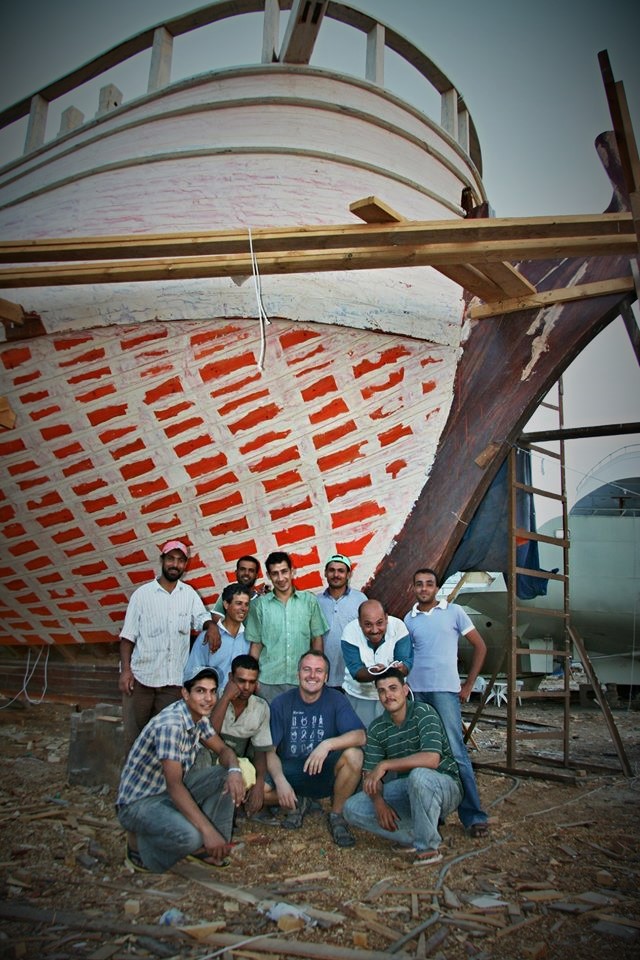
In 2008 I came to Libštát with a small group of friends, bringing a model of a replica of a ship from the second half of the 18th century and the naive notion that we would manage to find sponsors or a grant to finance this project of building a Czech sail training ship. But people rarely believe in ideas as bold as that. In most cases such visions and plans turn into the unattainable dreams of madmen. Only a fraction of those people then manage to turn their plans into reality. I presented our project in many places, and even though everyone liked it very much, nobody said to me: "Right, let's go and get on with it!". In the end I realised that what I was waiting for from other people, that impulse to set something in motion, had to come from me. Everyone else waited patiently to see whether my dream would turn into reality or run aground. A great role model for me was my friend and seafarer Ruda Krautschneider. I spent a large part of my life studying his thoughts and ideas. Thanks to him I found answers to some of the difficult questions of ordinary people. I began to turn problems and obstacles into advantages. I packed up and, together with Viktor Neuman, who understood it, flew off to Egypt. There I paid a ten percent deposit on the building of the ship of my dreams. It was all the money I had saved at the time and I had no idea at all what would come next, or what I would pay the rest with. But nobody had any idea that I did not know.
We felled trees, cut them up and started drying them on the Saharan sand. It was so crazy that it attracted the sensation-hungry media. That broke the ice between me and the people who dreamed of the same thing but whose everyday lives allowed them only to dream. A wave of volunteers rose up, offering me all sorts of help. "One is good at this and another at that, and all of us together..." People worked for free, in their spare time, on a shared dream. Thanks to these people, a genuine replica of an 18th-century ship began to grow at the Suez Canal. It was not an easy build and we had to grapple with a great many problems. But by that time there were a lot of us, so it went much more easily.
The build itself
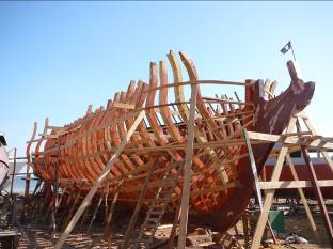
We started building the ship at the end of 2008 in a professional shipyard in Suez, Egypt. The main reason for choosing that place was the fact that all ships there are still built the traditional way. If you turn a blind eye to the T-shirts with advertising slogans that the local workers wear, you get the impression that you are in the 18th century. The local carpenters have proved many times over that they can do incredible things with wood using an absolute minimum of tools. Teaching them anything new, however, turned out to be almost impossible. But thanks to that a high-quality replica began to take shape. Just as in the 18th century, a model had to be made by Dan Rosecký so that the ship could be built from it. Thanks to the Suez Canal, quality timber from Scandinavia, which in the golden age of sail was the most popular and most usual building material, is also easily available in Egypt. The keel and ribs of the ship, however, are of extremely hard and durable camphor and mulberry wood. The planking and the decks are of Finnish pine.
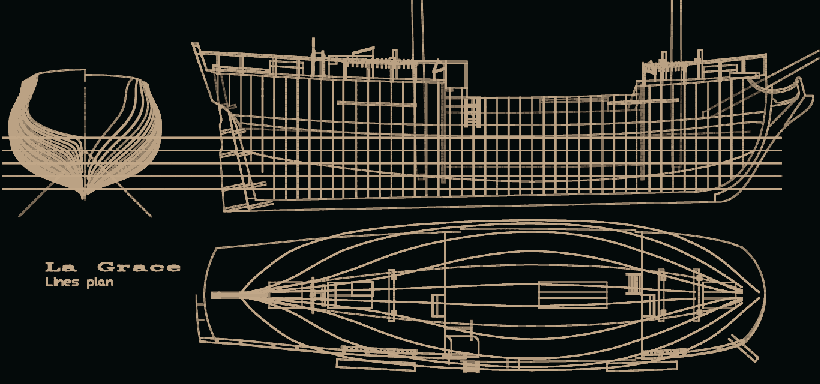
The masts, yards, tops and blocks, and also the steering wheel and the cannons, we made in Valašské Meziříčí. From June 2009 dozens of volunteers from all over the Czech Republic gathered at Vilém Pavlica's joinery workshop. They discovered modern technological procedures, but also old techniques that often proved faster and more efficient, they learned to splice ropes and much more. In December 2009 it all sailed off to Egypt in a container.
The following year was mostly in the spirit of the 21st century. The ship got an engine, a generator, water and electrical systems. Most of the work was again done by Czech specialists and volunteers.
La Grace was ceremonially launched on 5. 12. 2010 after just under 2 years of building.
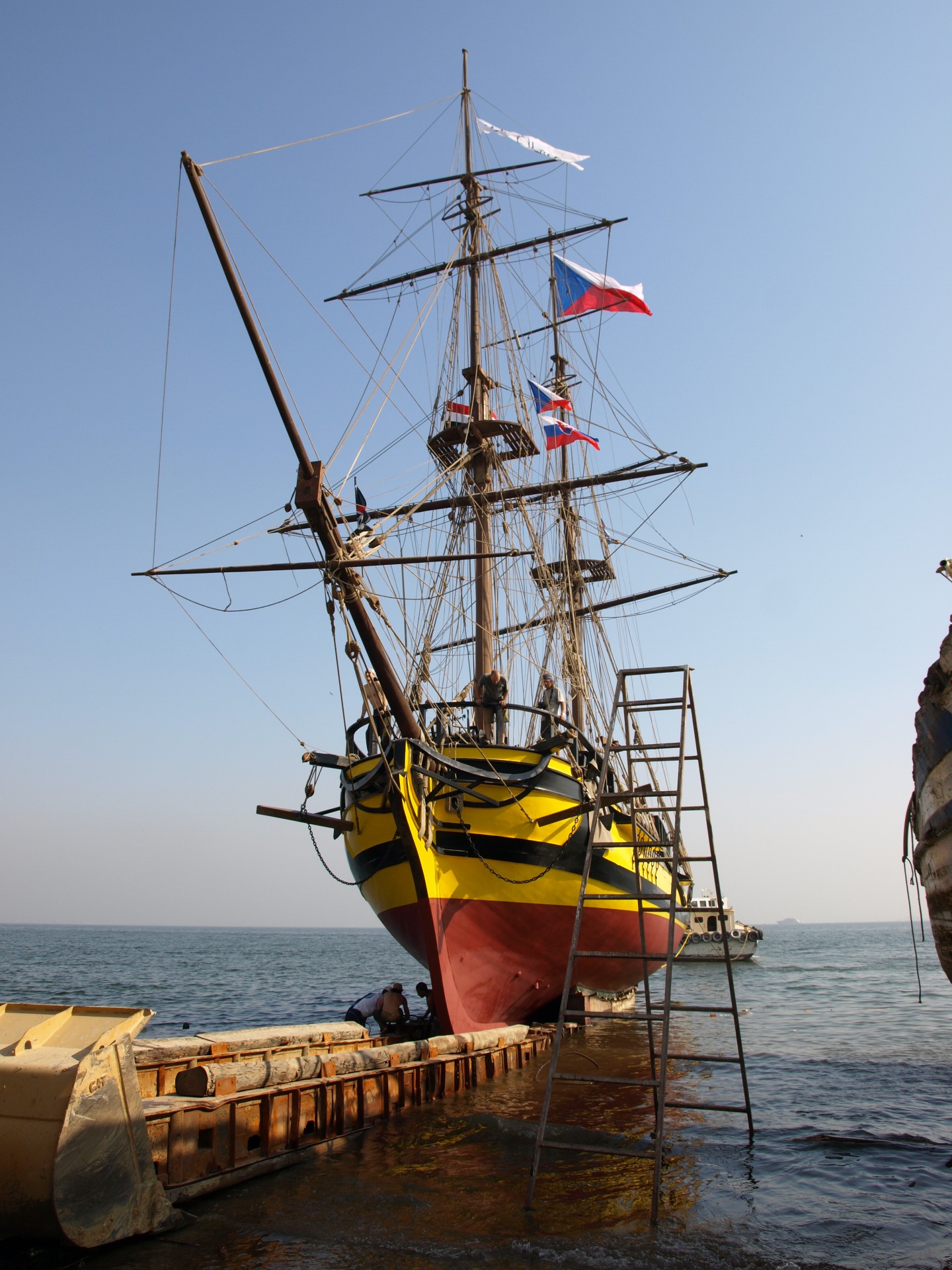
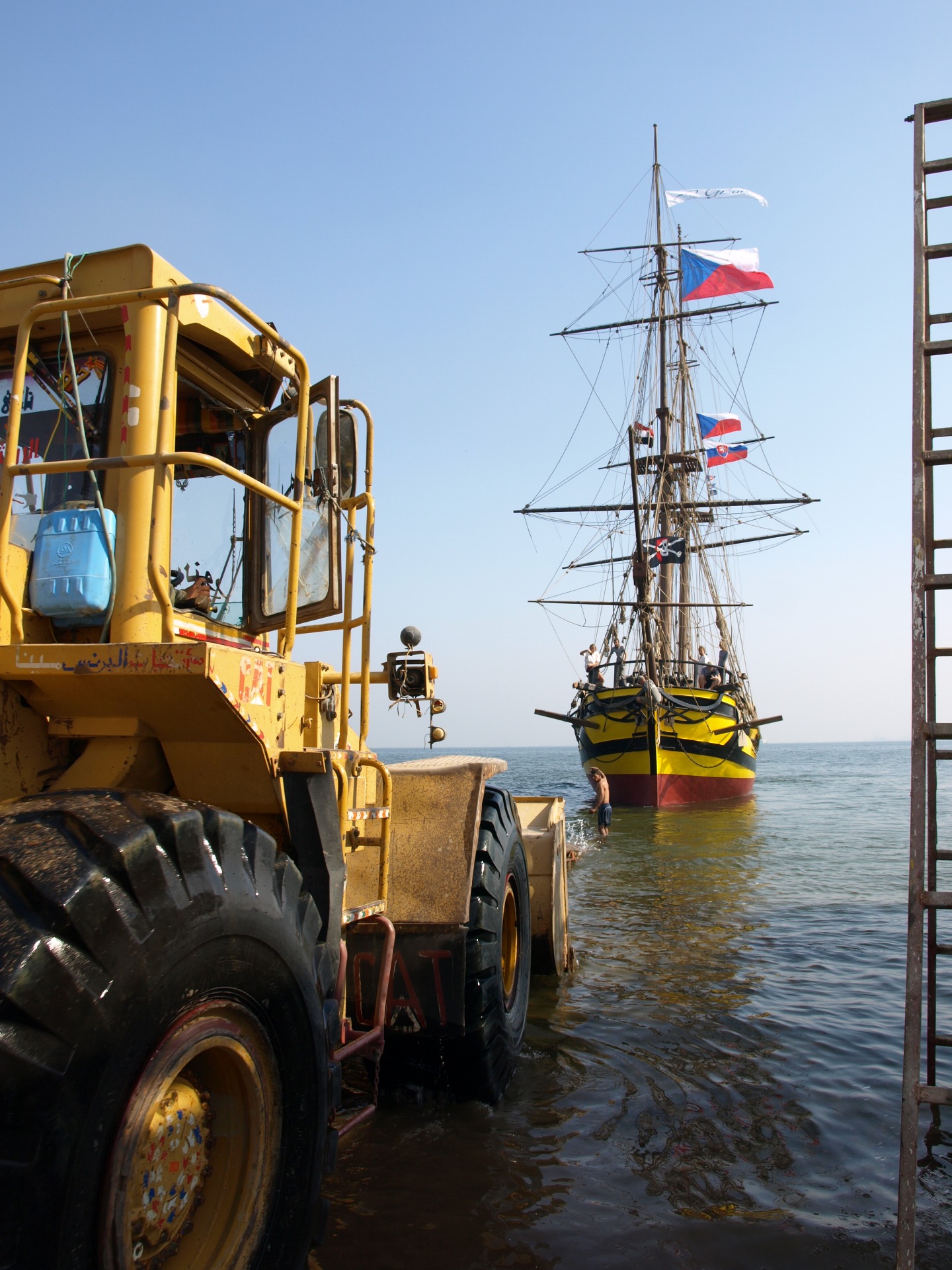
The building of the ship was financed exclusively from private funds. It could not, however, have been done without the help of hundreds of volunteers from all over the Czech Republic and Slovakia.
For them and for other enthusiasts there is also the La Grace friends club. You will find more information here.